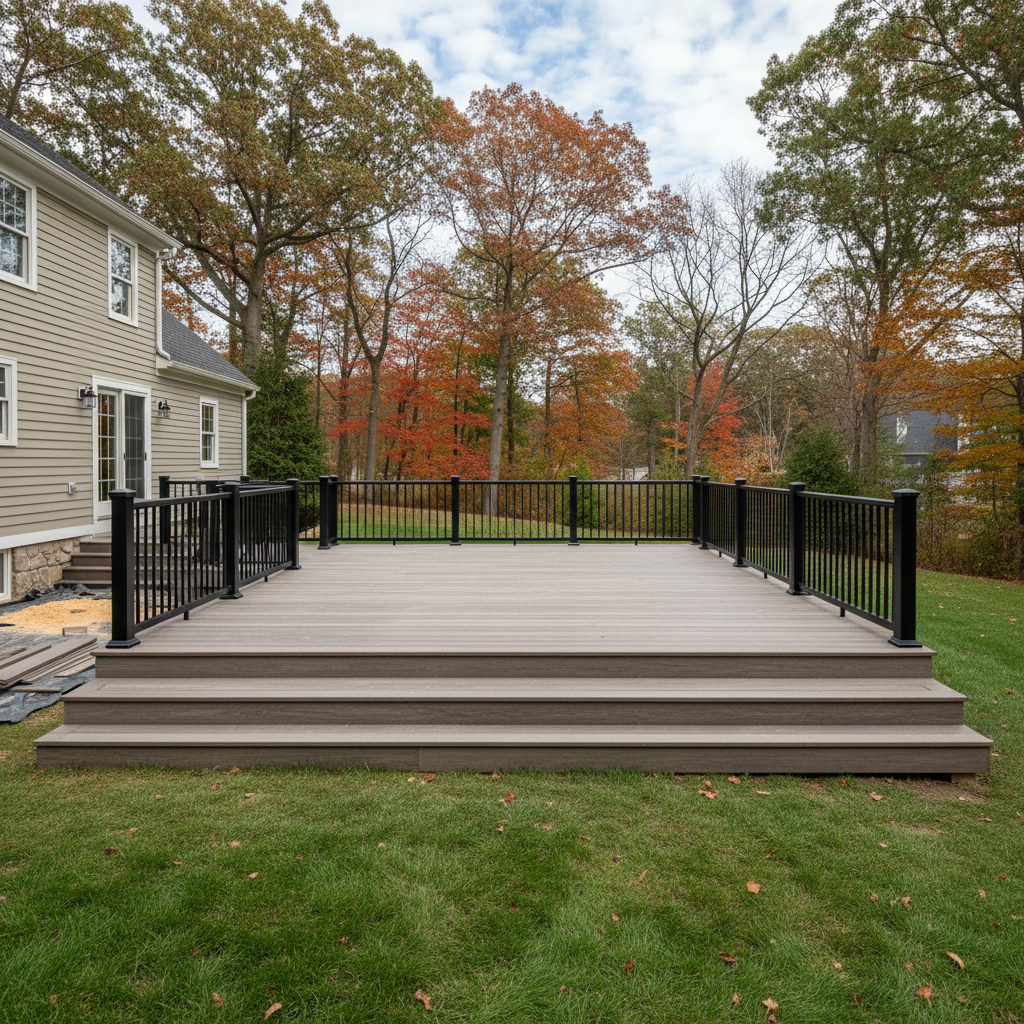
Alright, let's talk composite decks. You're probably looking at them because you want something low-maintenance, something that'll stand up to our crazy Cranston weather without you having to stain it every other year. Good call. Composite materials have come a long way, and they're a solid investment for a lot of homeowners around here, especially if you're in an area like Edgewood where the salt air can really do a number on wood.
When's the Best Time to Build a Composite Deck?
People always ask me, "When's the best time to get this done?" Honestly, with composite, you've got more flexibility than with traditional wood. We can build composite decks pretty much year-round, but there are definitely prime windows and things to watch out for.
Spring (April-June): This is probably the sweet spot. The ground's thawed, the weather's generally mild, and you've got plenty of time to enjoy your new deck all summer. We're usually booking up fast for spring, so if you're thinking about it, don't wait until May to call.
Summer (July-August): Totally doable. It can get hot, sure, but that doesn't stop us. The main thing here is scheduling. Everyone wants their deck done in summer, so lead times can be longer.
Fall (September-November): Another great window. The temperatures are usually perfect for working, and you can still get your deck built before the real cold sets in. Plus, if you get it done in the fall, it's ready to go the second spring hits.
Winter (December-March): We can absolutely build composite decks in winter, provided we're not dealing with a foot of snow or a deep freeze. The material itself isn't bothered by the cold, but digging footings in frozen ground is a real pain, and nobody wants to work with icy tools. If you're flexible and don't mind waiting for a break in the weather, sometimes you can get a project started sooner in the winter months because our schedule isn't as packed.
How Cranston Weather Affects Your Composite Deck Project
You know how it is in Rhode Island – we get a little bit of everything. That's why I always tell folks to think about the conditions when we're planning. Composite boards themselves are pretty stable, but the ground we're building on, and the folks doing the building, are definitely affected by the elements.
Rain: A little rain isn't a problem, but heavy, continuous downpours can delay things. Digging holes for footings in a mud pit is no fun, and it's not safe. Plus, we want to make sure the ground is stable for the foundation of your deck.
Temperature Swings: While composite is designed to expand and contract less than wood, it still does it a bit. We account for this during installation, leaving proper gapping. Our wild temperature swings from a warm fall day to a freezing night mean we're always thinking about those small tolerances.
Snow and Ice: This is the big one for winter builds. We can't work effectively or safely in heavy snow or on icy surfaces. If we get a big storm, we'll just have to pause until things clear up. It's all about safety and making sure the job gets done right.
Humidity: High humidity doesn't really bother composite decks during installation or afterward. That's one of the big advantages over wood, which can swell and shrink with moisture changes.
Protecting Your Composite Deck Year-Round
You've invested in a composite deck, so you want it to last, right? Good news: it's not hard. Here's what I tell my clients at All Things Decks:
Regular Cleaning: This is your number one defense. A good sweep to get rid of leaves and debris, then a wash with soap and water (or a composite deck cleaner) and a soft brush. Do this a couple of times a year, maybe in spring and fall. Don't use a pressure washer on too high a setting – you can damage the surface.
Snow Removal: When winter hits, you can shovel snow off your composite deck. Just use a plastic shovel, not metal, to avoid scratching. You don't need to worry about salt or ice melt damaging the material, but always check the manufacturer's recommendations for specific products.
Watch for Mildew: In our damp climate, especially in shadier spots, mildew can sometimes pop up. It's usually just on the surface and cleans off easily with a deck cleaner and a scrub brush. Don't let it sit there for too long.
Furniture Pads: If you've got heavy furniture, put little pads under the feet. It prevents scuffs and scratches, just like you would on an indoor floor.
Trim Overhanging Branches: Keep trees and shrubs trimmed back from your deck. Less debris means less cleaning, and it helps with air circulation, which discourages mildew.
That's pretty much it. Composite decks are tough, they're built to handle what Cranston throws at them, but a little common sense and regular cleaning will keep yours looking great for years. If you've got questions or you're ready to start planning, you know who to call.